What is Digital Marketing? A Complete Guide for Businesses
Introduction
In today’s digital-first world, having a great product or service is no longer enough. Customers are spending more time online than ever before, searching for information, comparing options, reading reviews, and making purchasing decisions. This shift has made digital marketing one of the most powerful tools for business growth.
Whether you are a startup, small business, local store, or large enterprise, digital marketing helps you connect with your target audience, build brand awareness, generate quality leads, and increase sales.
In this comprehensive guide, we’ll explore what digital marketing is, its key components, benefits, and why every business should invest in it.
What is Digital Marketing?
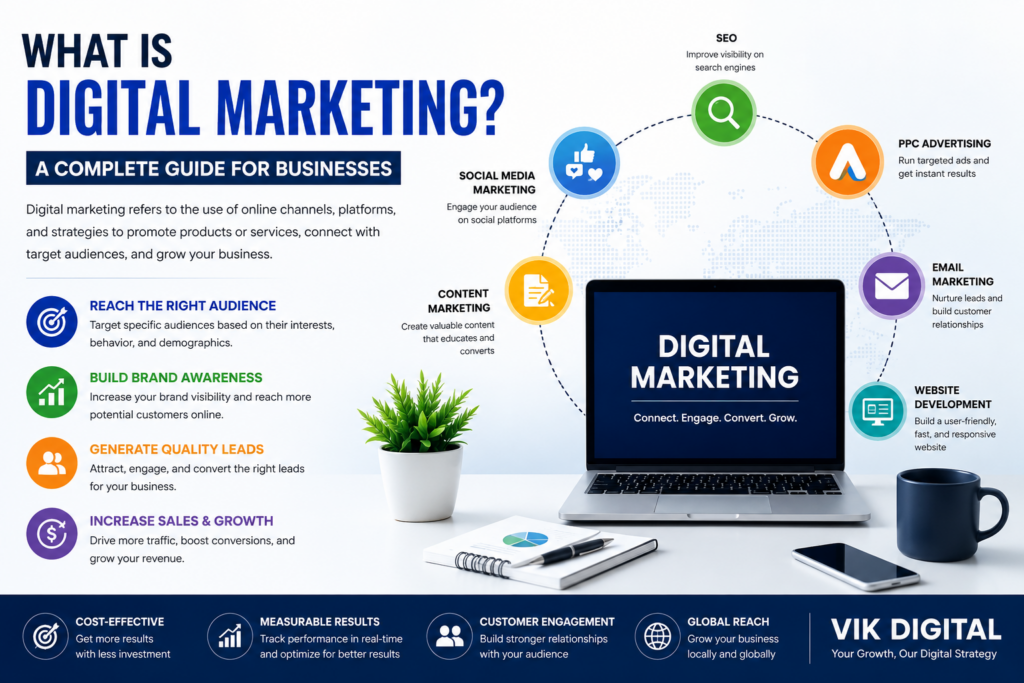
Digital marketing refers to the promotion of products, services, or brands through online channels and digital technologies. It involves using the internet, search engines, social media platforms, websites, email, and paid advertising to reach potential customers.
Unlike traditional marketing methods such as newspapers, radio, or billboards, digital marketing allows businesses to target specific audiences, track performance in real-time, and optimize campaigns for better results.
Simple Definition
Digital marketing is the process of attracting, engaging, and converting customers using digital platforms.
Why is Digital Marketing Important for Businesses?
88Consumers today rely heavily on the internet before making purchasing decisions. If your business doesn’t have a strong online presence, you’re likely missing out on valuable opportunities.
Digital marketing helps businesses:
Increase brand visibility
Reach targeted audiences
- Generate quality leads
- Improve customer engagement
- Drive website traffic
- Increase sales and revenue
- Build long-term customer relationships
Whether your customers are searching on Google, browsing social media, or checking emails, digital marketing ensures your business stays visible where your audience spends their time.
Key Components of Digital Marketing
1. Search Engine Optimization (SEO)
SEO is the process of improving your website’s visibility on search engines like Google.
When people search for products or services related to your business, SEO helps your website appear in search results, increasing organic traffic and potential customers.
Benefits of SEO:
- Higher Google rankings
- Increased website traffic
- Better credibility and trust
- Long-term results
- Cost-effective lead generation
2. Social Media Marketing (SMM)
Social media marketing involves promoting your business on platforms such as Facebook, Instagram, LinkedIn, YouTube, and X (Twitter).
It helps businesses engage with customers, build brand awareness, and generate leads.
Benefits of Social Media Marketing:
- Increased brand awareness
- Better customer engagement
- Improved customer loyalty
- Lead generation opportunities
- Wider audience reach
3. Pay-Per-Click Advertising (PPC)
PPC advertising allows businesses to place paid ads on search engines and social media platforms.
Popular PPC platforms include:
- Google Ads
- Facebook Ads
- Instagram Ads
- LinkedIn Ads
- YouTube Ads
Businesses only pay when users click on their advertisements.
Benefits of PPC:
4. Content Marketing
Content marketing focuses on creating valuable and informative content to attract and engage potential customers.
Examples include:
- Blog posts
- Articles
- Videos
- Infographics
- E-books
- Case studies
Quality content helps businesses establish authority and build trust with their audience.
Benefits of Content Marketing:
- Improved SEO performance
- Increased website traffic
- Better customer education
- Enhanced brand authority
- Higher conversion rates
5. Email Marketing
Email marketing remains one of the most effective digital marketing channels for nurturing leads and retaining customers.
Businesses use email campaigns to:
- Share updates
- Promote products
- Send newsletters
- Offer discounts
- Build customer relationships
Benefits of Email Marketing:
- High ROI
- Personalized communication
- Increased customer retention
- Better engagement
- Sales growth
6. Website Design and Development
Your website serves as the digital storefront of your business.
A professionally designed website should be:
- Mobile-friendly
- Fast-loading
- User-friendly
- Secure
- SEO-optimized
A well-designed website improves user experience and increases conversion rates.
Benefits of Digital Marketing
Cost-Effective Marketing
Compared to traditional advertising, digital marketing provides affordable solutions for businesses of all sizes.
Better Targeting
Reach specific audiences based on demographics, interests, location, behavior, and purchasing intent.
Real-Time Analytics
Track campaign performance using data and analytics tools.
Improved Customer Engagement
Interact directly with customers through social media, emails, and online communities.
Higher Conversion Rates
Digital marketing strategies help convert visitors into leads and customers more effectively.
Global Reach
Businesses can connect with customers locally, nationally, and internationally.
Digital Marketing vs Traditional Marketing
Digital Marketing | Traditional Marketing |
Cost-effective | More expensive |
Precise targeting | Broad targeting |
Real-time tracking | Limited tracking |
Higher engagement | One-way communication |
Faster results | Slower results |
Global reach | Mostly local reach |
How to Create a Successful Digital Marketing Strategy
Define Your Goals
Identify what you want to achieve:
- More website traffic
- Lead generation
- Brand awareness
- Increased sales
Understand Your Audience
Research customer demographics, interests, and online behavior.
Choose the Right Channels
Focus on the platforms where your audience spends time.
Create Valuable Content
Develop content that solves customer problems and answers their questions.
Monitor Performance
Use analytics tools to measure and improve campaign results.
Common Digital Marketing Mistakes to Avoid
- Ignoring SEO
- Not having a mobile-friendly website
- Inconsistent social media posting
- Poor audience targeting
- Neglecting content marketing
- Failing to track campaign performance
- Not optimizing for conversions
Avoiding these mistakes can significantly improve your marketing results.
The Future of Digital Marketing
The digital marketing landscape continues to evolve rapidly. Emerging trends include:
- Artificial Intelligence (AI)
- Voice Search Optimization
- Video Marketing
- Influencer Marketing
- Marketing Automation
- Personalization
- Data-Driven Marketing
Businesses that embrace these innovations will stay ahead of the competition.
Conclusion
Digital marketing is no longer optional—it’s essential for business growth. From SEO and social media marketing to Google Ads and content marketing, digital marketing provides businesses with powerful tools to reach customers, generate leads, and increase revenue.
The key to success lies in creating a strategic, data-driven approach that focuses on delivering value to your audience.
At VIK Digital, we help businesses grow with result-driven digital marketing strategies tailored to their goals. Whether you’re looking to improve your online visibility, generate more leads, or increase sales, our team is here to help.
Ready to Grow Your Business?
Contact VIK Digital today and discover how digital marketing can transform your business.